Mental health care work, such as therapy, are generally efforts and processes meant to better understand and positively impact affective (emotional), behavioral, cognitive (thoughts), and relational patterns (ABCR), themes, and aspects generally of a person’s life. In the context of therapy, those efforts and processes take place primarily through relationship with a therapist (and in some cases, a support group) who supports the work of better understanding and impacting our ABCR in a variety of ways, such as: simply caring; listening to what the person needs to share; helping make sense of what is being shared (how, why, and what else is being affected); directing efforts at improving life conditions; recommending and at times educating about forms of processioning; holding accountable to the person’s stated values; guiding conversations to support deeper introspection; asking thoughtful questions to open up more reflection and dialogue; collaboratively developing language to describe experiences, to name a few.
The following shares a bit more about my approach to the mental health care work services I offer here at Cicada Counseling Chicago.
Individual Therapy
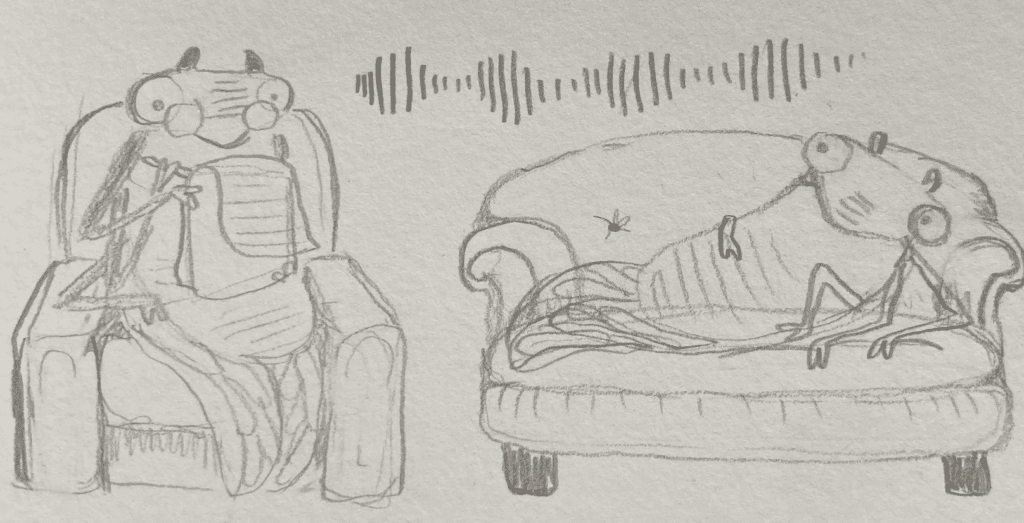
Individual therapy typically entails relational work between a certified mental health care professional and a person seeking clinical mental health care treatment. As mentioned in the about me section of this website, I offer individual therapy virtually for Illinois Residents. Sessions are 50 minutes in length. I primarily practice from the narrative therapy tradition, which involves tracing the histories and narratives of our thoughts, feelings, desires, behaviors, fears, insecurities, relationship habits, and other patterns to have better understanding of ourselves and to develop more agency in who we are and how we engage in our relationships as well.
Narrative therapy is a form of therapy developed in collaboration between several therapists throughout the 70’s-90’s in Aotearoa (New Zealand) while working with Māori communities. The therapists identified differences of thought processes, automatic emotions, and internalized beliefs about oneself in the Māori communities they were working with in contrast to their white peers. These internalized beliefs were very negative and did not seem to come from anything these people actually did, but were rather existential internalizations of political narratives from colonialism. These therapists worked with the Māori communities to externalize these negative thought patterns and internalized beliefs back to the respective narratives’ external sources of origin. That is, the therapists encouraged people to give the negative narratives back to colonialism and white supremacy as opposed to keeping them in their own minds and hearts. Narrative therapy was and remains one of the most liberatory therapy modalities in the Western psychological world, specifically because it was initially developed to unlearn beliefs that we all internalize from major socio-political paradigms, such as racism, colonialism, capitalism, etc.
As a queer and trans therapist, narrative therapy has been personally beneficial for me in unlearning harmful beliefs about myself, while also professionally useful in working with people in seeking personal liberation. Over the past several years, many people have become more familiar with concepts related to Internal Family Systems, or IFS. Much of the conceptual foundation of IFS is related to (and at times originates with) Narrative Therapy, with ‘parts work’ being the analogous operative metaphor for ‘narrative work’ – parts being parts of a person’s internal family system, whereas narratives are those parts’ histories, stories, and backgrounds. In narrative therapy, we attempt to explore and better understand the histories and points of contact that our beliefs, thought processes, and emotions have throughout our life course.
While my primary framework of practice is from the narrative tradition, I also offer therapy techniques that originate from IFS, Dialectical Behavioral Therapy, Existential Therapy, Liberation Psychology, Feminist relations of care, and motivational interviewing.
A unique intervention into these traditions that I often practice is centering our therapy work around shared values that we collaboratively develop in the first several sessions of therapy. Many people are not sure what their values are prior to our work together, having taken for granted that we all operate in our lives and in our relationships according to a variety of known and unknown values. Thus, we collaboratively explore what values exist for you, telling stories that illustrate the function and power of those values, and exploring what are the implicit and explicit offerings and asks that any given value entails for both us and our communities. Sometimes we envision a life for ourselves that is aligned to a value system we are not currently living out. In these cases, we discuss at what supports or lifestyle changes are necessary to begin living in alignment with one’s idealized value system (or at times accepting what are realistic values systems to work towards), and we determine how the therapy process can enable those supports and hold the person meaningfully accountable to those lifestyle changes.
Ultimately, individual therapy at Cicada Counseling is ideally useful for people who want to improve their thought lives, their emotional lives, and relational lives, for people who want to feel in greater harmony and alignment with their values, and for people who have experienced any forms of oppression, discrimination, or alienation due to dominant cultural political norms.
Relationship Counseling
Relationship counseling at Cicada Counseling Chicago is similar to individual counseling offerings in that we still work from a values-based narrative therapy approach for the relationship in counseling. In our first few sessions, we will identify and name our collective values that will be both the foundation and compass for our work together. Many relationships assume values alignment without having ever really been direct about what their values are, what they understand themselves to be offering the relationship in alignment with those values, and what they are implicitly or explicitly asking from the relationship based on said values. In these conversations, I have witnessed many people make profound realizations about both themselves and their relationship. While it is not a guarantee, many relationships tend to improve communication and compatibility with a few values-setting sessions.
I also incorporate transformative justice approaches to relationship counseling through a variety of “therapy projects” so to say that are largely adapted from transformative justice approaches to conflict mediation. These projects can include listening exercises, spoons charting, family tree autobiographies, letter writing exchanges, and more. I have found that these exercises and projects can be really useful in improving trust, communication, understanding, rapport, and alignment in many relationships.
It is always such an honor to be entrusted with the care of people’s significant relationships, and I really enjoy this sensitive and complicated work. You deserve to feel happy and safe in your relationships, and I hope to be able to support in that experience!
Support Groups
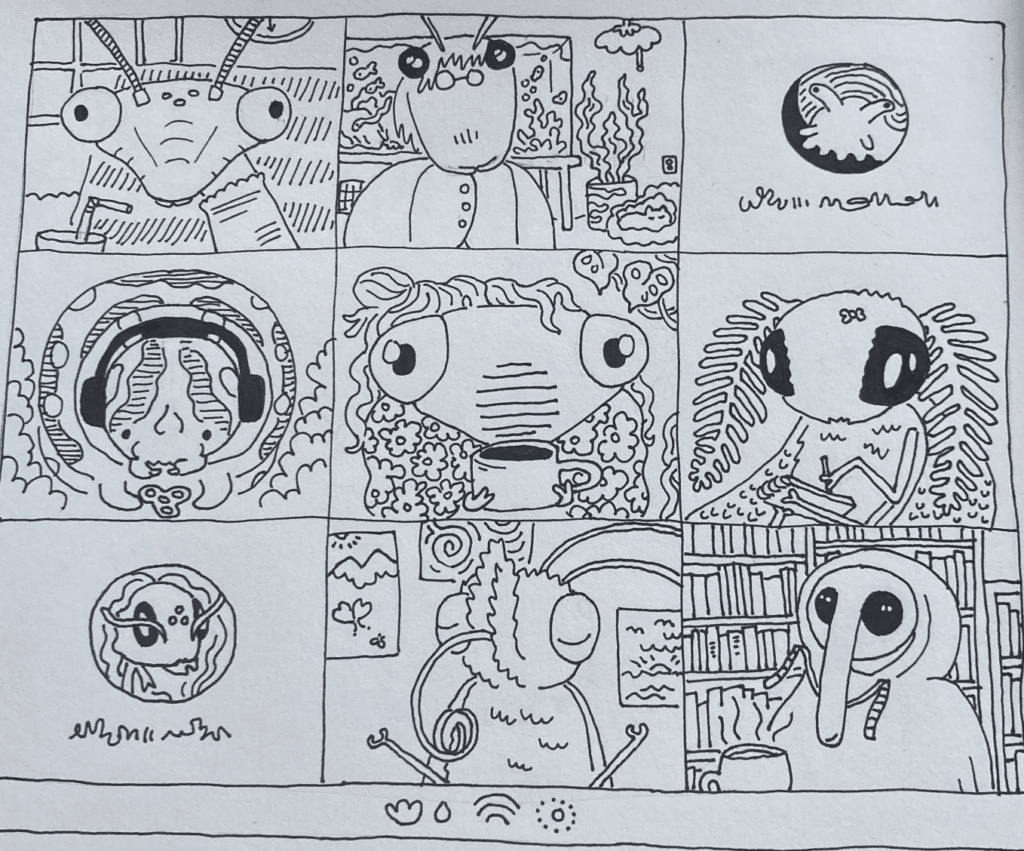
Cicada Counseling Chicago is working to bring several support groups to Illinois residents this summer and autumn 2026. Support groups are small communities where several people of some shared experience and or identity can safely share their stressors and challenges, receive collective support and care, and be prompted with group activities and questions by the facilitator.
As of now, I am preparing the following groups for Cicada Counseling Chicago:
- Trans in the Workplace:
- For trans people who have experienced any kind of discrimination, harassment, or abuse in workplace, school, or other institutional settings
- Climate change grief and anxiety support group:
- For climate conscious individuals seeking to express and share grief and anxiety regarding the state of our collective home.
- Chronic Pain writing support group:
- For chronic pain baddies who love to journal and want to do so in community.
- Protest trauma support group:
- For people who have experienced some form of trauma in protest settings.
Some insurances will be accepted for support groups, and a generous sliding scale will be offered. Feel free to reach out if you would like to be added to the waitlist for any of these groups
Psychological Support and Evaluation Letters (such as FMLA and ESA)
As a licensed clinical social worker in the state of Illinois, I am able to complete a range of psychological support and evaluation letters. I often complete FMLA leave from work requests, surgery recommendation requests, gender affirming care support letters, emotional support animal verifications, and more. Feel free to reach out with any questions or concerns regarding these services!
Conflict Mediation
While often similar in function and practice as relationship counseling, I also offer conflict mediation specifically. This service can function similarly to the relationship counseling services, however in this case I typically focus less on the narrative approaches to care work in order to emphasize transformative justice approaches to conflict mediation. In my graduate class work, I studied transformative justice and feminist accountabilities at DePaul University, and was honored to co-facilitate a variety of peace circles around campus for survivors of abuse, violence, and traumatization. I practice the skills learned in those peace circles in the hopes of mending complex relationship conflict in sessions.
Narrative Therapy style letters
Narrative therapy was traditionally practiced with an emphasis of letter writing, with a belief that writing and reading offers a form of healing and care work that simply speaking could not offer. That practice is no longer considered inherent or necessary for the work of narrative therapy. However, I still enjoy the narrative letter writing process, and have received positive feedback about feeling seen, understood, validated, cared for, and being prompted with complex questions that led to really useful breakthroughs. That said, these letters take a good amount of time to write, and they are not covered by insurance, so I offer these letters at my hourly rate. I wish I could offer them to everyone free of charge, but unfortunately that has not proven sustainable for me at this time. Nonetheless, if you are interested in or curious about this service, feel free to let me know that in your introductory email, or throughout the course of working together.